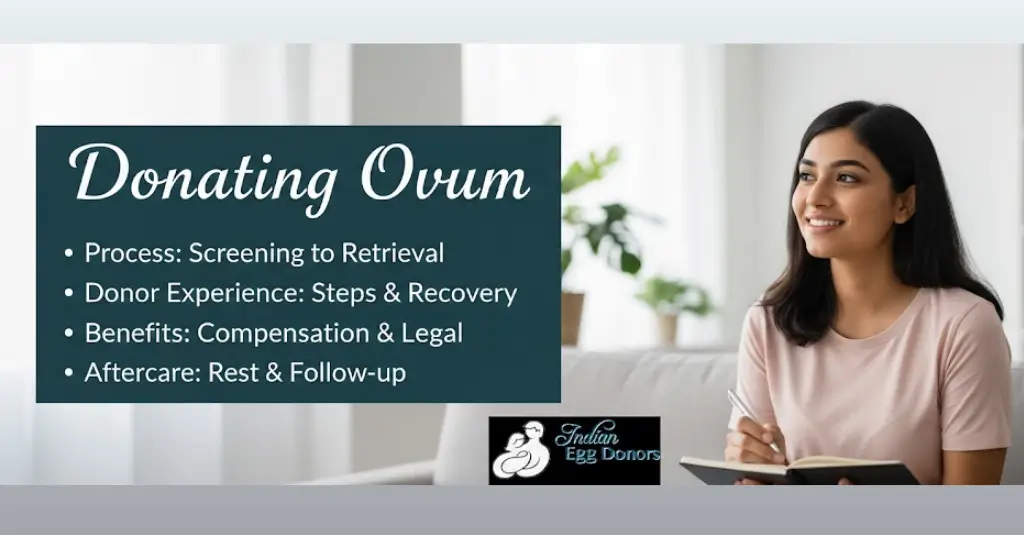
Donating your egg or ovum (egg) will be a genuinely thoughtful method to aid someone else, or two people, form the foundation of a family. It’s a medical procedure, but it’s also a personal and emotional one. In many countries, such as India, egg donation is strictly controlled and entails an entire process of preparation and testing, as well as treatment and recuperation. This guide explains what happens step by step, what your body goes through, and what you should know before you begin. To help you make sense of it all, I’ll also weave in how Indian Egg Donors supports people through this journey in a respectful, responsible way.
What Egg Donation Is and Why It Matters
At its core, what is ovum donation can be understood as a process where a woman offers some of her eggs to help another woman conceive. These eggs are retrieved in a clinic and then fertilized with sperm in a laboratory using in vitro fertilization (IVF). After fertilization, the embryos are transferred to the recipient’s uterus in hopes of pregnancy. This form of ovum donation IVF is a common and effective way for women who cannot use their own eggs, whether because of age, premature ovarian failure, genetic conditions, or other fertility issues, to have a child.
This process gives many hopeful families a chance to become parents. Still, it does require commitment and understanding from the donor, too.
Who Can Be an Egg Donor?
Egg donation isn’t for all. Clinics are looking for women who are mentally and physically capable of undergoing the process. If you’re contemplating whether to become an egg donor, you must satisfy certain ethical and medical requirements. In India, according to current guidelines for medical care, the typical requirements are:
- Age: Most clinics accept donors between about 23 and 35 years old.
- Health: You should be free from major medical conditions or hereditary/genetic disorders, and physically fit.
- Mental wellbeing: A psychological screening helps ensure you understand the emotional side and are comfortable with the process.
- Willing participation: Donation must always be voluntary, with informed consent.
Some clinics also look at the lifestyle aspects, like smoking cessation, as well as a healthy body weight and regular menstrual cycles. Indian Egg Donors is a clinic that works with women who adhere to the strictest health standards, and ensures their health and wellbeing, while carefully matching donors.
The Egg Donation Process: A Step-by-Step Look
Here’s what typically happens once you decide to donate. The ovum donation process is carefully structured to protect both your health and the success of the treatment.
1. Initial Consultation and Counseling
Your journey begins with a detailed conversation with a fertility specialist. This includes reviewing your medical history, understanding why you want to donate, discussing the potential risks and emotional aspects, and going over legal forms. Many clinics also provide counseling so that you can ask all your questions.
This first step gives you a clear picture of what lies ahead, so you feel confident moving forward.
2. Screening and Testing
Next, you undergo several medical tests:
- Blood tests for hormone levels and infectious diseases
- Ultrasounds to check ovarian health
- Genetic screening to rule out inherited disorders
- Psychological evaluation
These assessments make sure your eggs are strong candidates for donation, and they protect your long-term health.
3. Synchronization and Medication
After approval, you’ll begin an in-line cycle of hormones specifically designed to stimulate your ovaries to create many mature eggs, instead of only one, which normally occurs every month. The typical time span is 9-14 days. During this time, you’ll be able to take regular blood tests and ultrasounds to check the progress.
You will inject the hormones with the guidance of medical staff. They’ll alter the dosage if necessary, depending on the hormone levels and the growth of follicles.
4. Egg Retrieval
After your eggs have matured, the sedative light is administered. Then, doctors remove eggs with a tiny needle that is guided by ultrasound. The procedure can take between 20 and 30 minutes, and you’ll be relaxed all the way through. Women typically return home the same day.
This step is done in a controlled medical environment. Afterward, you’ll rest for a few hours and then can usually get back to normal activities within a day or two.
5. What Happens to the Eggs
Once collected, the eggs are transported to a lab, where they may be fertilized using sperm from a partner or donor. The embryos that form can be transferred fresh or frozen for later use. IVF specialists handle this part, aiming to give the recipient the best chance of a successful pregnancy.
Throughout this, your role as the donor is complete after the retrieval, but your contribution lives on in the potential for new life.
Recovery and Aftercare
After egg retrieval, most donors feel back to normal in a day or two. Mild cramping or bloating is common but usually fades fast. Clinics provide clear instructions on what to watch for, like signs of infection or hormonal side effects. While ovum donation risks are generally minimal when performed under expert supervision, you should always contact your care team if anything feels unusual.
Indian Egg Donors ensures donors have open access to medical support and answers through the recovery period, so you never feel alone.
Also Read:
- IVF Meaning : What is IVF and How Does It Help with Fertility
- How To Choose The Best Egg Donors Agency For You
Legal, Ethical, and Emotional Things to Know
Egg donation laws vary widely around the world and in India, they’re designed to protect donors and recipients:
- Consent is crucial. You must understand and agree to every step in writing.
- Compensation is regulated. Discussions around ovum donation price are governed by legal and ethical frameworks and donation is generally altruistic or limited to reimbursement of medical costs.
- Anonymity rules vary. Some arrangements are anonymous by law, while others may allow known donors with clear agreements.
Because egg donation touches on identity, family, and ethics, emotional support through counseling is a key part of the whole process.
Why People Choose Donating Ovum
Motivations differ when it comes to donating ovum. Some donors are moved by the idea of helping someone become a parent. Others appreciate the medical support and close care they receive. Whatever the reason, the decision should be thoughtful and informed. With Indian Egg Donors, the focus is always on safety, respect and transparency — for donors and for recipients.
Final Thoughts
Donating an ovum is a journey of science and compassion. It involves medical care, personal reflection, and careful planning. From the initial consultation through the day of retrieval, you’ll be supported both physically and emotionally. If you’re considering donating, consider talking to experts to ask questions and pick a reliable program that is mindful of your health and the wishes of the families who will receive the gift.
Whether you’re just curious or ready to take the first step, understanding the full process helps you make the best choice for you.
Ready to take the next step or simply want to know more about ovum donation? The team at Indian Egg Donors is here to guide you with care, clarity, and respect at every stage. Whether you have questions about eligibility, the process, or how to begin, reach out anytime.
- Email: info@indianeggdonors.com
- Phone: (212) 661-7177
Your choice can change a life. Get in touch today and start the conversation.
Frequently Asked Questions:-
Q. Is egg donation painful?
Ans : Most donors feel little to no pain during the procedure since light sedation is used. Mild cramping or bloating afterward is common and usually goes away within a day or two.
Q. How long does the egg donation process take?
Ans : From screening to egg retrieval, the full ovum donation process usually takes about 2 to 4 weeks, depending on how your body responds to the medications.
Q. Are there any long-term health risks from donating eggs?
Ans : When done under proper medical supervision, egg donation is considered safe, and ovum donation risks are minimal. Serious complications are rare and clinics monitor donors closely throughout the process.
Q. Will donating eggs affect my ability to have children later?
Ans : No. The eggs retrieved are ones your body would naturally lose during that cycle. Donation does not reduce your future fertility.
Q. Is egg donation confidential?
Ans : Yes. Most programs keep donor information private, following medical and legal guidelines to protect everyone involved.

Dr. Veera Saghar
As an Egg Donor Coordinator, she plays a critical role in our company. Her background as a medical graduate from ISRA UNIVERSITY in Pakistan provides us with a solid foundation in the medical sciences. She has seven years of clinical experience practicing in the USA. This has given her firsthand experience when collaborating with patients and their families.
She is responsible for managing the process of egg donation from start to finish. We identify and screen potential egg donors.
- Dr. Veera Sagharhttps://blog.indianeggdonors.com/author/dr-veera/

- Dr. Veera Sagharhttps://blog.indianeggdonors.com/author/dr-veera/

- Dr. Veera Sagharhttps://blog.indianeggdonors.com/author/dr-veera/

- Dr. Veera Sagharhttps://blog.indianeggdonors.com/author/dr-veera/