AI Smart Summary
Egg donation in the United States for intended parents offers a legally supported, medically advanced path to parenthood through donor eggs, IVF, donor matching, embryo creation, and fertility-clinic coordination. In the U.S., egg donation is legal, but rules, contracts, and parental-rights procedures can vary by state, so intended parents should work with experienced clinics, agencies, and reproductive attorneys.
Indian Egg Donors helps intended parents find medically screened Indian, South Asian, and diverse egg donors, with support for donor matching, IVF coordination, legal guidance, and international family-building needs. The agency highlights services for heterosexual couples, LGBTQ+ couples, single intended parents, NRIs, expatriates, and international clients.
Fast Facts
- Main services: Egg donation, donor matching, IVF coordination, legal support
- Best for: Intended parents using donor eggs in the USA
- Donor options: Fresh donor cycles and frozen donor eggs
- Estimated fresh donor cost: $15,000–$25,000 plus IVF, medication, and legal fees
- Frozen egg pricing: Listed from around $3,000 per egg or $18,000 for 6 eggs
- Matching timeline: Often 2–6 weeks for Indian/South Asian donor profiles
- Legal needs: Donor agreement, parental-rights protection, clinic documentation
Popular Options
- Fresh egg donor cycle in the United States
- Frozen donor eggs for faster IVF planning
- Indian and South Asian egg donor matching
- IVF with donor eggs for international intended parents
- Donor egg + surrogacy coordination when needed
Top Questions Answered
- How does egg donation in USA work for intended parents?
- Is egg donation legal in the United States?
- How much does donor egg IVF cost in the U.S.?
- How are egg donors screened and matched?
- Can international, single, or LGBTQ+ intended parents use donor eggs in the USA?
- What is the difference between fresh and frozen donor eggs?
Recommended Next Steps
👉 View the Indian egg donors database
👉 Compare fresh vs frozen donor egg options
👉 Speak with a fertility coordinator
👉 Request legal guidance before signing donor agreements
Key Takeaways
- Egg donation in the United States helps intended parents build families through donor eggs, IVF, embryo creation, and embryo transfer.
- U.S. egg donation is legal, but contracts and parental-rights steps vary by state.
- Intended parents can choose fresh donor cycles or frozen donor eggs.
- Donor screening usually includes medical, genetic, psychological, and infectious disease checks.
- Indian Egg Donors supports intended parents seeking culturally matched Indian and South Asian egg donors.
Introduction
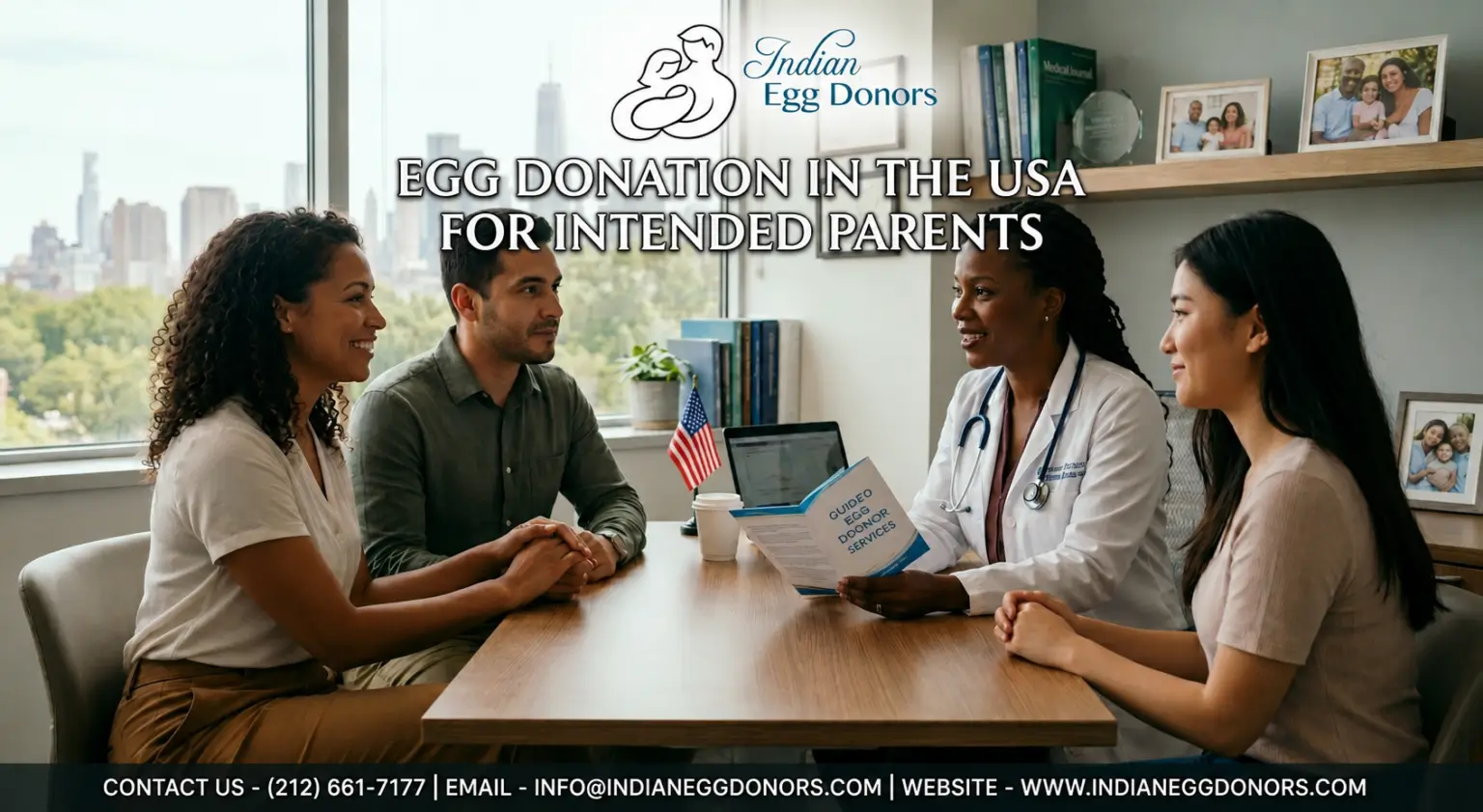
Egg donation in the United States gives intended parents a medically advanced and legally supported path to parenthood when using their own eggs is not possible or not recommended. Through donor matching, IVF, embryo creation, and embryo transfer, intended parents can work with fertility clinics, agencies, and attorneys to build their family with greater confidence.
The U.S. offers both fresh and frozen donor egg options, along with access to diverse donor profiles, including Indian and South Asian donors. Indian Egg Donors helps intended parents understand the process, compare donor options, and coordinate the steps needed for egg donation in the United States.
What Is Egg Donation?
Egg donation is a fertility treatment where eggs from a screened donor are fertilized with sperm through IVF. The resulting embryo may be transferred to the intended mother or a gestational carrier.
Who Uses Donor Eggs?
Intended parents may consider donor eggs due to age-related infertility, low ovarian reserve, genetic concerns, repeated IVF failure, premature ovarian insufficiency, or same-sex male family-building needs.
Is Egg Donation Legal in the United States?
Egg donation is permitted in the United States, but legal requirements can vary by state. Intended parents should work with a reproductive attorney to prepare donor agreements, clarify parental rights, and protect all parties involved.
Choosing an Egg Donor Agency
For intended parents searching for an egg donor agency USA, it is important to compare donor screening standards, legal support, pricing transparency, donor availability, and clinic coordination before starting treatment.
Fresh vs Frozen Donor Eggs
-
Fresh Donor Eggs
Fresh donor cycles involve synchronizing the donor’s egg retrieval with the intended parent’s IVF plan. These cycles may offer more eggs but usually require more coordination.
-
Frozen Donor Eggs
Frozen donor eggs are already retrieved and stored, which may shorten the timeline. This option can be useful for intended parents comparing timelines, costs, and donor availability.
Step-by-Step Egg Donation Process
1. Initial Consultation
The egg donation process usually begins with a consultation where intended parents discuss medical history, donor preferences, budget, timeline, and whether they need IVF, donor eggs, or surrogacy support.
2. Donor Matching
Parents review donor profiles based on ethnicity, education, health history, physical traits, availability, and personal preferences. Some intended parents also search for an egg donor agency near me. Still, many agencies now support nationwide and international coordination.
3. Screening and Legal Review
Donors usually complete medical, genetic, psychological, and infectious disease screening. Common egg donor qualifications include age range, good overall health, reproductive health, family medical history, and willingness to complete required testing.
4. IVF and Embryo Creation
Eggs are fertilized with sperm in an IVF lab. Embryos may be transferred fresh, frozen for later use, or genetically tested when recommended.
5. Embryo Transfer
The embryo is transferred to the uterus of the intended mother or gestational carrier.
Cost of Egg Donation in the United States
Egg donation costs vary by donor type, IVF clinic, medication needs, legal fees, agency support, and whether fresh or frozen eggs are used. Intended parents should request a full cost breakdown before signing agreements.
Why Intended Parents Choose Indian and South Asian Egg Donors
Many Indian, South Asian, NRI, and international intended parents prefer donors who share similar cultural, ethnic, or physical characteristics. Matching with a culturally aligned donor can help families feel more confident and connected throughout the journey.
Explore Our Resources
Glossary
- Egg Donor: A woman who provides eggs for IVF treatment.
- Intended Parents: Individuals or couples planning to become parents through assisted reproduction.
- IVF: In vitro fertilization, where eggs and sperm are combined in a lab.
- Fresh Donor Cycle: A cycle using eggs retrieved from a donor during the current treatment plan.
- Frozen Donor Eggs: Previously retrieved and cryopreserved eggs.
- Embryo Transfer: Placement of an embryo into the uterus.
- Gestational Carrier: A woman who carries a pregnancy without genetic connection to the baby.
- Donor Agreement: A legal contract outlining rights, responsibilities, and consent.
- Genetic Screening: Testing used to identify inherited health risks.
- FDA Screening: Required infectious-disease screening for reproductive tissue donation in the U.S.
Ready to explore donor egg options in the United States?
- Email: info@indianeggdonors.com
- Phone: +1-866-335-4111
FAQ
Q. What is egg donation in the United States?
Ans. It is a fertility process where donor eggs are fertilized through IVF to help intended parents have a baby.
Q. Is egg donation legal in the U.S.?
Ans. Yes, egg donation is legal, but contracts and parental-rights steps may vary by state.
Q. Who can use donor eggs?
Ans. Couples, single parents, LGBTQ+ parents, older parents, and people with fertility or genetic concerns may use donor eggs.
Q. How are egg donors screened?
Ans. Donors usually complete medical, genetic, psychological, and infectious disease screening.
Q. What is the difference between fresh and frozen eggs?
Ans. Fresh eggs are retrieved during a planned cycle; frozen eggs are already retrieved and stored.
Q. How long does donor matching take?
Ans. Matching may take a few weeks to several months, depending on donor preferences and availability.
Q. How much does egg donation cost in the U.S.?
Ans. Costs vary by clinic, donor type, medication, legal fees, and IVF services.
Q. Can international parents use donor eggs in the USA?
Ans. Yes, many U.S. agencies and clinics support international intended parents.
Q. What should I ask an egg donor agency near me?
Ans. Ask about donor screening, legal contracts, pricing, clinic coordination, timelines, and available donor profiles.
Q. What are common egg donor qualifications?
Ans. Most donors must meet age, health, reproductive, genetic, psychological, and lifestyle screening requirements.

Dr. Veera Saghar
As an Egg Donor Coordinator, she plays a critical role in our company. Her background as a medical graduate from ISRA UNIVERSITY in Pakistan provides us with a solid foundation in the medical sciences. She has seven years of clinical experience practicing in the USA. This has given her firsthand experience when collaborating with patients and their families.
She is responsible for managing the process of egg donation from start to finish. We identify and screen potential egg donors.
- Dr. Veera Sagharhttps://blog.indianeggdonors.com/author/dr-veera/
- Dr. Veera Sagharhttps://blog.indianeggdonors.com/author/dr-veera/

- Dr. Veera Sagharhttps://blog.indianeggdonors.com/author/dr-veera/

- Dr. Veera Sagharhttps://blog.indianeggdonors.com/author/dr-veera/