AI Smart Summary
Quick Answer
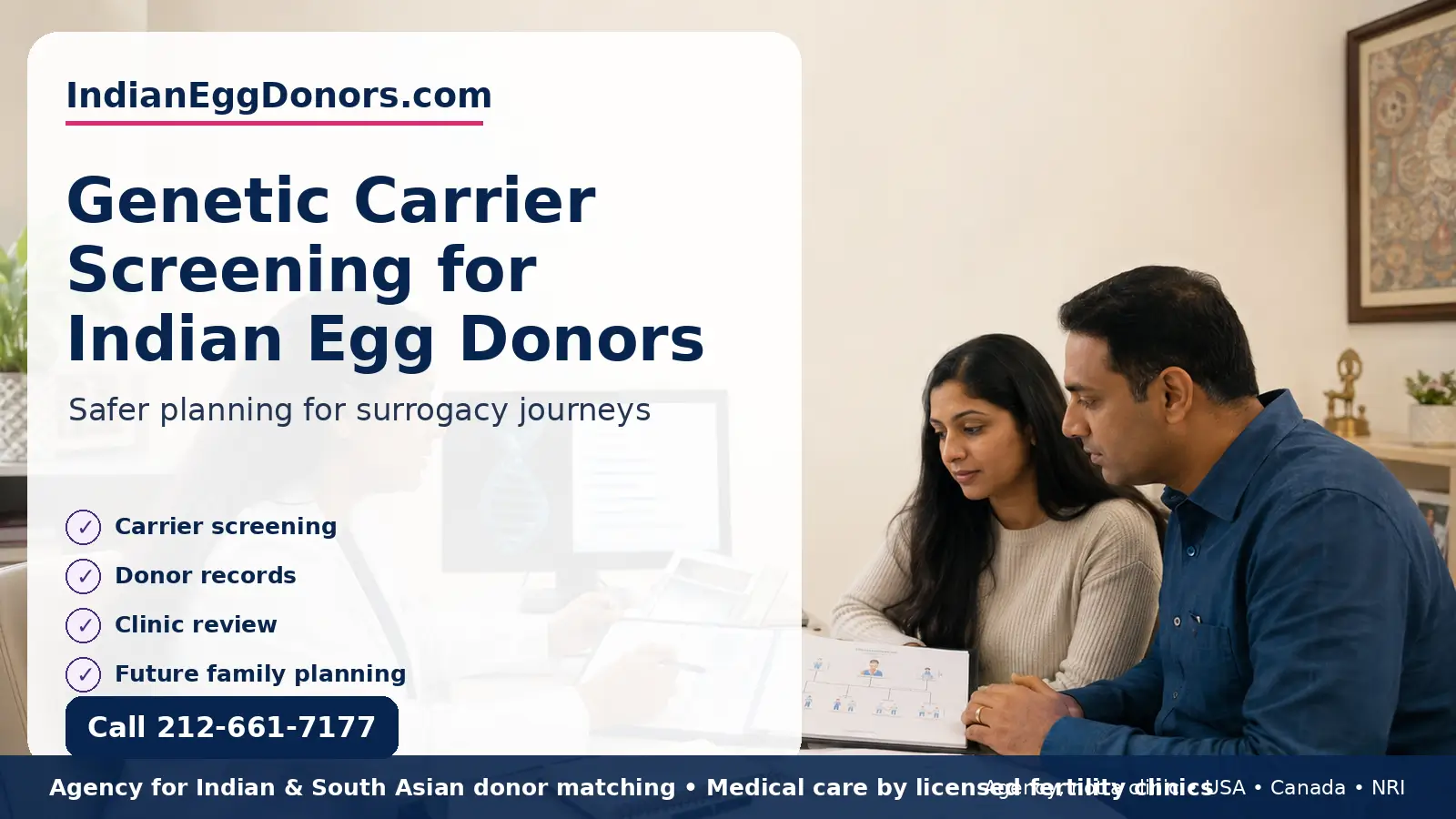
Genetic carrier screening helps identify whether an egg donor carries certain inherited genetic conditions that could potentially be passed to future children.
Carrier screening is not a diagnosis and does not predict every possible health condition. Instead, it helps fertility clinics and intended parents make informed decisions during donor selection and family planning.
Medical interpretation of genetic screening results should always be handled by licensed fertility professionals and qualified genetic counselors when appropriate.
Why Genetic Carrier Screening Matters
For intended parents using donor eggs, donor selection involves more than cultural background, education, or personal characteristics.
Medical screening is also an important part of the evaluation process.
Genetic carrier screening helps provide information that may assist with:
- Donor evaluation
- Family planning
- Embryo creation decisions
- Fertility treatment planning
- Future sibling planning
The goal is to improve understanding and support informed decision-making.
What Is Genetic Carrier Screening?
Carrier screening is a type of genetic testing that evaluates whether an individual carries certain inherited genetic variants.
Many carriers are healthy and have no symptoms.
Because carriers often do not know they carry a genetic variant, screening may provide additional information during fertility planning.
It is important to understand that carrier status does not mean someone has a disease.
How Genetic Carrier Screening Works
The process generally follows several steps.
Step 1: Medical History Review
The fertility clinic reviews:
- Personal medical history
- Family medical history
- Relevant health information
Step 2: Laboratory Testing
A laboratory performs genetic screening using approved testing methods.
Step 3: Results Analysis
Genetic specialists evaluate the screening results.
Step 4: Fertility Clinic Review
The fertility clinic determines how screening information may affect treatment planning.
Step 5: Intended Parent Discussion
Results may be discussed with intended parents as part of the donor selection process.
Common Conditions Often Included in Screening
Screening panels vary by laboratory and clinic.
Examples may include conditions such as:
- Cystic Fibrosis (CF)
- Spinal Muscular Atrophy (SMA)
- Thalassemia-related conditions
- Sickle Cell-related conditions
- Other inherited disorders
The specific panel used may differ depending on clinic protocols and medical recommendations.
Why Genetic Screening Is Important for South Asian Families
South Asia is one of the world’s most genetically diverse regions.
Families may have:
- Different regional backgrounds
- Different family histories
- Different genetic considerations
Because every family is unique, screening helps provide additional information for fertility specialists and intended parents.
The purpose is not to eliminate risk but to improve awareness and informed decision-making.
Fresh vs Frozen Donor Screening
Many intended parents ask whether screening differs between fresh and frozen donor programs.
Fresh Donor Programs
Screening is generally completed before donor approval and treatment planning.
Frozen Donor Programs
Screening is typically completed before eggs become available in a donor program.
Comparison
| Factor | Fresh Donor | Frozen Donor |
| Medical Screening | Yes | Yes |
| Genetic Screening | Yes | Yes |
| Review by Clinic | Yes | Yes |
| Documentation Available | Yes | Yes |
| Medical Approval Required | Yes | Yes |
The review process may differ slightly between programs, but medical evaluation remains important in both pathways.
What Carrier Screening Does NOT Tell You
This is one of the most misunderstood topics in fertility treatment.
Carrier screening does not:
❌ Guarantee a healthy child
❌ Predict every future health condition
❌ Eliminate all medical risks
❌ Replace medical counseling
❌ Provide complete genetic certainty
Instead, screening is one piece of a much larger medical evaluation process.
Questions Intended Parents Should Ask
Before selecting a donor, consider asking:
Has carrier screening been completed?
Which laboratory performed the testing?
What screening panel was used?
Will my fertility clinic review the results?
Should I meet with a genetic counselor?
How does screening affect donor eligibility?
Will screening records be available for review?
These questions help create a more informed decision-making process.
Real Educational Example
A South Asian intended parent wanted to select a donor based primarily on cultural compatibility.
During the clinic review process, additional attention was given to donor screening records and family medical history.
The fertility team used both cultural preferences and medical information to support donor selection discussions.
This example demonstrates why medical review and donor matching should work together rather than independently.
Common Misconceptions
Myth: Carrier Status Means Disease
Reality: Many carriers are healthy and never develop symptoms.
Myth: Screening Guarantees Outcomes
Reality: No screening test can guarantee a specific outcome.
Myth: All Clinics Use the Same Screening Panel
Reality: Screening practices may vary.
Myth: Cultural Matching Is More Important Than Medical Screening
Reality: Both factors should be considered during donor selection.
Genetic Screening Review Checklist
Before moving forward, confirm:
✅ Medical history reviewed
✅ Family history reviewed
✅ Carrier screening completed
✅ Laboratory information available
✅ Fertility clinic review completed
✅ Questions answered clearly
✅ Genetic counseling considered if recommended
✅ Donor documentation reviewed
✅ Future family-building goals discussed
✅ Treatment plan understood
Frequently Asked Questions
Q. What is genetic carrier screening?
A. Carrier screening evaluates whether an individual carries certain inherited genetic variants that could be relevant to family planning.
Q. Does carrier screening diagnose disease?
A. No. Carrier screening identifies carrier status and is not a disease diagnosis.
Q. Is carrier screening required for egg donors?
A. Requirements vary depending on clinic protocols, donor programs, and applicable guidelines.
Q. Can frozen egg donors have carrier screening?
A. Yes. Frozen donor programs typically include medical and genetic screening before donor availability.
Q. Does carrier screening guarantee a healthy baby?
A. No. Screening provides valuable information but cannot eliminate all risks or guarantee outcomes.
Final Thoughts
Genetic carrier screening is an important educational and medical component of modern donor egg programs.
For Indian and South Asian intended parents, understanding how screening works can help support more informed conversations with fertility professionals.
The strongest donor selection process balances cultural preferences, family goals, medical guidance, and genetic screening information.
When used appropriately, carrier screening helps families make thoughtful decisions while working closely with licensed fertility clinics and qualified medical professionals.
Disclaimer
IndianEggDonors.com is an egg donor agency and not a fertility clinic. Medical decisions regarding donor suitability, genetic screening, IVF treatment, embryo creation, and fertility outcomes should always be made by licensed fertility clinics and qualified healthcare professionals.

Dr. Kulsoom Baloch
Dr. Kulsoom Baloch is a dedicated donor coordinator at Indian Egg Donors, leveraging her extensive background in medicine and public health. She holds an MBBS from Ziauddin University, Pakistan, and an MPH from Hofstra University, New York. With three years of clinical experience at prominent hospitals in Karachi, Pakistan, Dr. Baloch has honed her skills in patient care and medical research.
- Dr. Kulsoom Balochhttps://blog.indianeggdonors.com/author/dr-kulsoom/
- Dr. Kulsoom Balochhttps://blog.indianeggdonors.com/author/dr-kulsoom/

- Dr. Kulsoom Balochhttps://blog.indianeggdonors.com/author/dr-kulsoom/
- Dr. Kulsoom Balochhttps://blog.indianeggdonors.com/author/dr-kulsoom/