AI Summary
- Egg donation is a fertility treatment where eggs from a donor help another person achieve pregnancy.
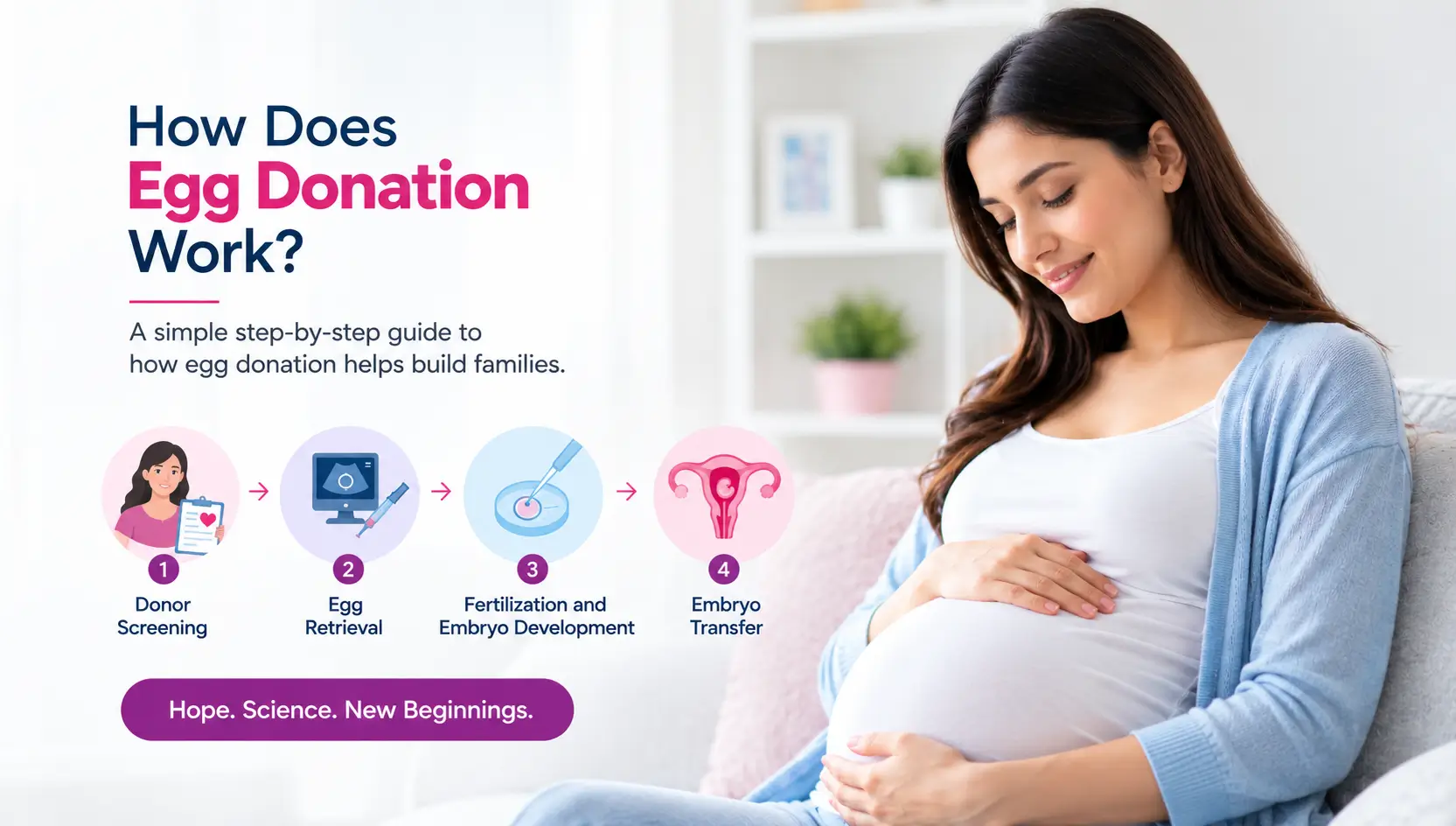
- The egg donation process includes donor screening, hormone treatment, egg retrieval, fertilization, and embryo transfer.
- Donors must meet specific health and age requirements before donating eggs.
- A fertility clinic guides both donors and recipients throughout the complete journey.
Egg donation is a medical process that helps individuals and couples experience the possibility of having a baby when using their own eggs may not be possible. Many people have questions about what is egg donation, how donors are selected, and what steps are involved. Understanding the process can make it easier for both donors and intended parents to make informed decisions.
What Is Egg Donation and Why Is It Needed?
Egg donation is a medical procedure that involves a woman producing eggs that are then given to another person to assist in pregnancy. Eggs are retrieved from the donor and fertilized in a petri dish through IVF. The embryos are then transferred to the intended mother’s uterus.
Many people choose egg donation because of challenges such as reduced egg quality, age-related fertility issues, inherited conditions, or previous unsuccessful fertility treatments.
Egg donation gives intended parents another option to build their family with the support of assisted reproductive technology.
How Does the Egg Donation Process Work Step by Step?
The egg donation process involves several important stages. Each step is carefully managed by fertility specialists to ensure safety and proper medical care.
1. Initial Consultation and Planning
A fertility clinic appointment typically begins with an evaluation to understand better a patient’s concerns and desired end result regarding fertility. At this time, the donation and recipient process is discussed in detail to outline the various risks involved. Realistic expectations are communicated.
2. How Are Egg Donors Selected?
Selecting a suitable donor is an important part of the process. Donors are usually matched based on medical information, physical characteristics, and compatibility factors.
Clinics maintain detailed donor records to help recipients find a suitable match while following privacy and legal guidelines.
What Are the Requirements to Become an Egg Donor?
Many people ask about the requirements to become an egg donor before starting the process. While criteria can vary between clinics, donors generally need to meet certain health standards.
Common requirements include:
- Being within the recommended age range set by the fertility program
- Having good overall physical health
- Maintaining a healthy lifestyle
- Completing medical and genetic screening
- Passing psychological evaluation
- Understanding the responsibilities involved in donation
These requirements help protect the health of both the donor and the future child.
How to Become an Egg Donor?
Women interested in donating eggs usually begin by contacting a fertility clinic or egg donation program.
The process generally includes:
- Completing an application form
- Sharing medical and family history
- Undergoing health tests and screenings
- Meeting with fertility specialists
- Starting the donation treatment cycle if approved
Women should understand that egg donation is a serious medical decision. Proper guidance from experienced professionals is important before beginning.
What Happens During Egg Donor Screening?
Before donating eggs, candidates go through detailed screening to check their physical and emotional readiness.
Screening may include:
Medical Evaluation
Doctors perform health checks, blood tests and hormone assessments to understand the donor’s fertility health.
Genetic Testing
Family history and genetic screening help identify possible inherited health concerns.
Psychological Assessment
Counseling helps donors understand the emotional aspects of egg donation and the responsibilities involved.
This evaluation ensures that donors are prepared and suitable for the process.
What Happens During Egg Stimulation and Egg Retrieval?
After approval, the donor receives hormone medications that encourage the ovaries to produce multiple mature eggs.
During this period:
- Doctors monitor egg development through ultrasound scans
- Hormone levels are checked regularly
- Medication adjustments may be made when needed
Once the eggs reach maturity, doctors perform egg retrieval. A specialist uses a small procedure to collect the eggs from the ovaries under medical supervision.
The collected eggs are then prepared for IVF treatment.
How Are Donated Eggs Used in IVF Treatment?
After egg retrieval, the eggs are combined with sperm in a laboratory. Fertilization creates embryos that are monitored by embryologists.
The healthiest embryo is selected and transferred into the recipient’s uterus.
After the embryo transfer, the recipient waits for a pregnancy test to confirm whether implantation has occurred. The entire process requires coordination between donors, recipients, doctors, and laboratory specialists.
What Are the Criteria for Donating Eggs?
The donating eggs criteria focuses on ensuring donor safety and maintaining successful treatment outcomes.
Important factors usually include:
- Age and reproductive health
- Medical history
- Lifestyle habits
- Genetic background
- Emotional readiness
Every donor is evaluated individually because health conditions and circumstances can differ from person to person.
Indian Egg Donors helps connect eligible donors with families looking for fertility solutions while providing guidance throughout the donation journey.
Is Egg Donation Safe?
Egg donation is generally performed under medical supervision, but like any medical procedure, it may involve some risks.
Possible temporary effects may include:
- Bloating or discomfort from hormone medication
- Mood changes
- Mild pain after egg retrieval
Doctors carefully monitor donors throughout the treatment cycle to reduce risks and provide proper care.
Why Do People Choose Egg Donation?
Egg donation can help people who cannot conceive using their own eggs. It may provide an opportunity for individuals and couples facing different fertility challenges.
Some common reasons include:
- Low egg quality
- Reduced ovarian reserve
- Advanced maternal age
- Genetic concerns
- Previous IVF failures
With proper medical support, egg donation has become an important option in modern fertility care.
Start Your Egg Donation Journey Today
If you want to learn more about egg donation eligibility, donor requirements, or the complete process, connect with the specialists at Indian Egg Donors.
- Email: info@indianeggdonors.com
- Phone: (212) 661-7177
- Cell: (917) 601-4919
Their team can guide you through the process and answer your questions with care and professional support.
Frequently Asked Questions –
Q. What is egg donation?
A. Egg donation is a fertility process where a woman donates her eggs to help another person achieve pregnancy through IVF treatment.
Q. Who can become an egg donor?
A. Women who meet health, age, medical, and psychological requirements may qualify to become egg donors after completing screening.
Q. How long does the egg donation process take?
A. The timeline can vary, but the preparation, medical testing and treatment cycle usually take several weeks.
Q. Is donating eggs painful?
A. Most donors experience only mild discomfort. Doctors provide medication and monitoring to make the procedure as safe and comfortable as possible.
Q. Can I become an egg donor more than once?
A. Some women may donate eggs multiple times depending on medical guidelines, health status and clinic recommendations.

Dr. Pooja Patel
Dr. Pooja Patel is a Chief Surrogacy Coordinator at Surrogacy4all. She has 10 years of experience in Anesthesiology and critical care medicine.
She received her medical degree from Seth GS Medical College and K.E.M Hospital in India. She then completed an internship. She finished her Anesthesia residency at Grant Govt Medical College and JJ Group of Hospitals in India.
- Dr. Pooja Patelhttps://blog.indianeggdonors.com/author/dr-pooja/

- Dr. Pooja Patelhttps://blog.indianeggdonors.com/author/dr-pooja/

- Dr. Pooja Patelhttps://blog.indianeggdonors.com/author/dr-pooja/
- Dr. Pooja Patelhttps://blog.indianeggdonors.com/author/dr-pooja/