AI Summary
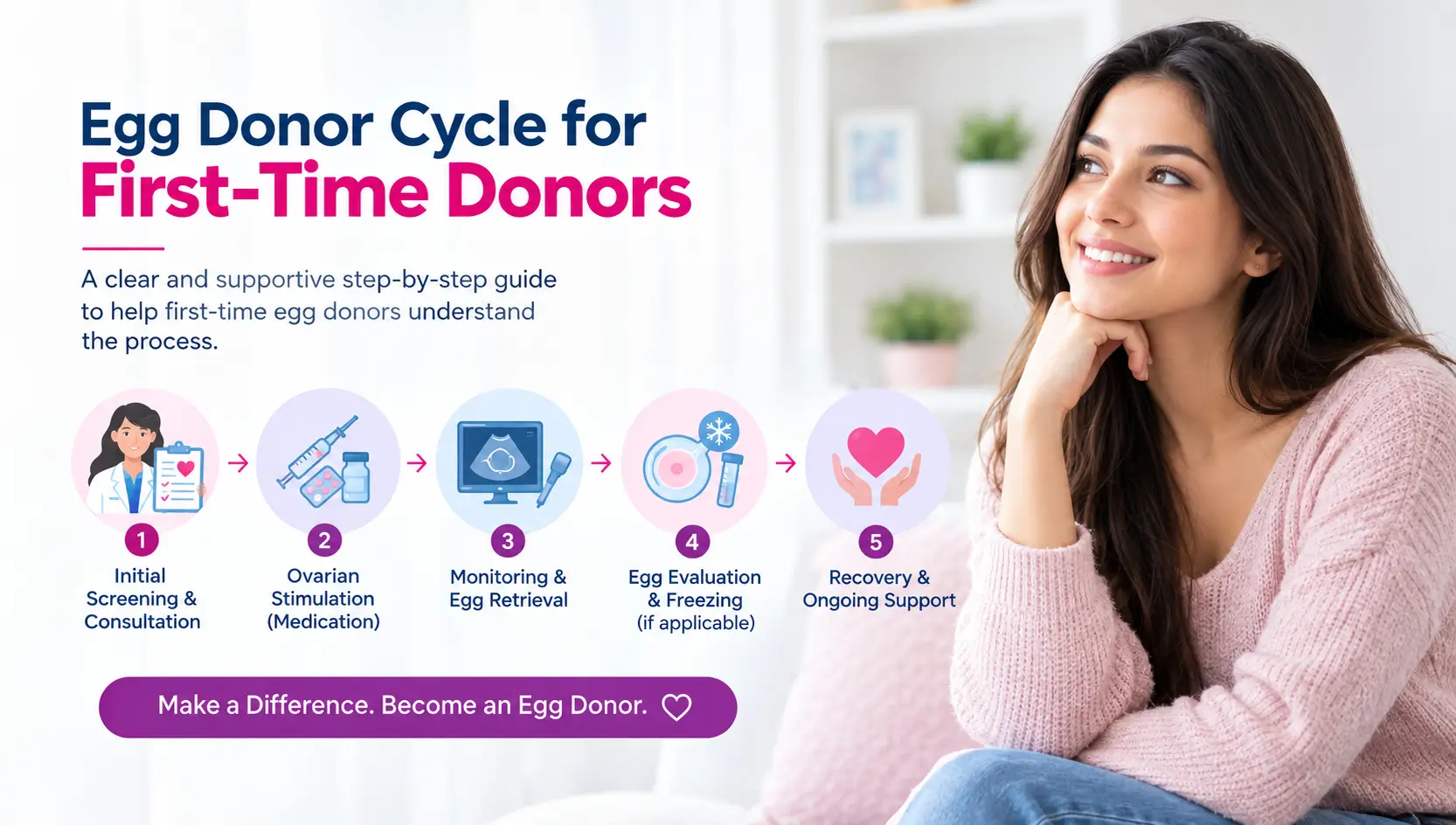
- An egg donation cycle involves medical screening, preparation, hormone treatment and egg retrieval.
- First-time donors usually complete the process within several weeks, depending on approval and scheduling.
- Donors go through health checks, counseling and regular monitoring before egg collection.
- The egg retrieval procedure is a short medical process performed under medical supervision.
- Understanding each stage helps donors feel prepared and confident before starting.
Introduction
Women hoping to apply to be egg donors have a lot of questions about the process. They want to see the timeline and understand the procedure and what is expected of them. The process is controlled to keep the donor safe. The egg donation cycle has several steps and is undertaken by a team of fertility specialists. One of the most important steps is the communication and coordination of the various specialists involved. Understanding the process will help a first-time donor ease her mind and know what to expect.
What is an Egg Donation Cycle?
An egg donation cycle is the complete process where a woman donates her eggs to help another person or couple achieve pregnancy through assisted reproductive treatment. It includes medical testing, preparation, hormone medication, monitoring and egg collection.
The purpose of the cycle is to help fertility specialists collect healthy eggs that can be fertilized in a laboratory and used during an IVF procedure.
For women searching for what is an egg donation cycle, it is important to understand that the process is planned carefully to protect the donor’s health while supporting intended parents.
How Does the Egg Donor Screening Process Begin?
Before starting an egg donation procedure, potential donors must complete a detailed screening process. This step helps doctors confirm that the donor is medically and emotionally prepared.
The screening usually includes:
- Medical history review
- Physical examination
- Blood tests
- Hormone testing
- Ultrasound evaluation
- Genetic screening
- Psychological consultation
A qualified donor is selected based on health information, lifestyle factors and medical suitability.
Many women begin their journey through an egg donation agency that guides them through applications, screening, and communication with fertility clinics.
How Does an Egg Donor Get Matched With Intended Parents?
After approval, donors may be matched with individuals or couples who are looking for donor eggs.
People who want to find an egg donor usually review donor profiles that include:
- Basic background information
- Educational background
- Medical history
- Physical build
- Personal interests
Members are fully informed about the implications of their participation in surrogacy before the process begins. Agreements are signed to protect the interests of all the parties involved.
What Happens During the Egg Donation Preparation Stage?
After matching, the donor prepares for the active donation cycle. Doctors may use medications to coordinate the donor’s menstrual cycle with the recipient’s IVF treatment schedule.
This involves:
- Managing your cycle with medication
- Meeting with your doctor
- Getting ultrasounds
- Going for blood tests
These processes help the fertility care team schedule when they will retrieve your eggs.
What Happens During the Egg Stimulation Phase?
During stimulation, the donor receives hormone injections that encourage the ovaries to produce multiple mature eggs. This stage usually lasts around 8 to 14 days.
They have routine check-ins at the clinic to:
- Get their hormone levels checked
- Have their meds adjusted
- Have ultrasounds done to monitor follicle growth.
Doctors time egg collection once follicle growth is enough to indicate the eggs are mature.
The monitoring process helps improve safety and ensures that the eggs develop properly.
How Is the Egg Donation Procedure Performed?
The final medical step is the egg retrieval procedure. When the eggs are mature, a fertility doctor collects them using a specialized technique.
The process includes:
- The use of medications to assist with relaxation and comfort.
- The use of ultrasound to help in the location of the follicles.
- The removal of the eggs with a small needle to be later sent to the fertility laboratory for further processing.
The process, on average, takes less than an hour. Patients are able to return home the same day the process is performed.
How Long Does an Egg Donor Cycle Take?
The complete timeline can vary depending on medical approval, matching and scheduling. A typical cycle may take several weeks.
The general timeline includes:
- Screening and approval: 2–6 weeks
- Matching process: Depends on availability
- Preparation stage: Around 2 weeks
- Hormone stimulation: 8–14 days
- Egg retrieval: One scheduled procedure
- Recovery: Several days
There are donors that can complete the donation process faster. Others need more time due to the nature of their scheduling or medical testing.
How Can Beginners Start the Egg Donation Journey?
To begin, it is important to find the right team that supports you. An egg donor bank or fertility organization can help you with this process.
A trusted program helps donors understand:
- Eligibility requirements
- Medical procedures
- Legal steps
- Emotional considerations
- Recovery expectations
Indian Egg Donors helps connect qualified donors with families looking for egg donation support while providing guidance throughout the journey.
Start Your Egg Donation Journey Today
If you are interested in learning more about becoming an egg donor or want guidance about the donation process, the team at Indian Egg Donors is ready to help.
- Email: info@indianeggdonors.com
- Phone: (212) 661-7177
- Cell: (917) 601-4919
Frequently Asked Questions –
Q. How long does an egg donation cycle take?
A. Egg donation cycles consist of several weeks of screening, preparation, and medication, followed by the retrieval process. Timing can vary based on individual situations.
Q. Is the egg donation procedure painful?
A. Most donors experience minimal discomfort because medication is provided during retrieval. Some may experience temporary bloating, cramping or tiredness after the procedure.
Q. How many eggs are collected during an egg donation cycle?
A. The number of eggs collected varies for each donor. Doctors monitor ovarian response to determine how many mature eggs are available.
Q. Can first-time donors complete the process safely?
A. Yes. First-time donors undergo medical screening and continuous monitoring to help ensure their safety throughout the cycle.
Q. Where can someone learn more about becoming an egg donor?
A. Women interested in learning more can contact a trusted fertility organization or egg donation agency for detailed guidance about eligibility and next steps.

Dr. Pooja Patel
Dr. Pooja Patel is a Chief Surrogacy Coordinator at Surrogacy4all. She has 10 years of experience in Anesthesiology and critical care medicine.
She received her medical degree from Seth GS Medical College and K.E.M Hospital in India. She then completed an internship. She finished her Anesthesia residency at Grant Govt Medical College and JJ Group of Hospitals in India.
- Dr. Pooja Patelhttps://blog.indianeggdonors.com/author/dr-pooja/
- Dr. Pooja Patelhttps://blog.indianeggdonors.com/author/dr-pooja/

- Dr. Pooja Patelhttps://blog.indianeggdonors.com/author/dr-pooja/

- Dr. Pooja Patelhttps://blog.indianeggdonors.com/author/dr-pooja/