AI Summary
- Egg donors can receive financial compensation for their time and participation in a donation cycle.
- Eligibility usually depends on age, health, medical history, and lifestyle.
- The process includes application, medical screening, matching, medication, monitoring, and egg retrieval.
- Compensation varies by donor, program, location and experience.
- Egg donation should be considered carefully because it involves medical procedures and possible side effects.
- A qualified fertility professional can explain the risks, requirements, and payment terms before you decide.
Introduction
Can you donate eggs for money? Yes, eligible women can receive compensation for participating in an egg donation program. However, payment is generally provided for the donor’s time, effort, inconvenience, and commitment rather than simply for the eggs themselves. The amount can vary depending on the program, donor qualifications, location, and previous donation experience. Before applying, it is important to understand the requirements, medical screening, treatment process, recovery period, and payment terms. This guide explains how egg donation works, who may qualify, what compensation can look like, and what beginners should consider before making a decision.
How Much Can You Get for Donating Eggs?
Egg donor compensation is not the same for every person or program. Some programs offer several thousand dollars for a completed donation cycle. At the same time, certain qualified or experienced donors may receive higher compensation.
The highest egg donor compensation can depend on factors such as:
- Donor qualifications
- Previous successful donation experience
- Program requirements
- Location
- Donor profile and demand
- Completion of the full donation cycle
Compensation should always be confirmed directly with the program before you begin.
Can You Donate Eggs for Money?
Yes. Qualified women can apply to egg donation programs and may receive compensation after completing the required process. It is important to understand that egg donation is not simply a quick way to earn money. It requires medical appointments, testing, medication, monitoring, and an egg retrieval procedure. Programs also have eligibility rules designed to protect both donors and intended parents.
Who Can Donate Eggs?
What Are the Basic Egg Donor Requirements?
Requirements vary between programs, but common criteria may include:
- Being within the program’s required age range
- Having generally good physical health
- Having regular menstrual cycles
- Meeting health and BMI requirements
- Having a suitable medical and family history
- Not using nicotine or recreational drugs
- Being able to attend required appointments
- Completing medical and psychological screening
Meeting the basic requirements does not guarantee acceptance. A medical team makes the final determination after reviewing your health and test results.
What Can Disqualify an Egg Donor?
Certain medical or lifestyle factors may prevent someone from qualifying. These can include specific health conditions, unsuitable medical history, certain genetic concerns, substance use, or problems identified during screening.
Each program has its own rules. Therefore, it is better to discuss your individual situation with the program rather than assuming you are automatically eligible or ineligible.
How Does the Egg Donation Process Work?
What Happens After You Apply?
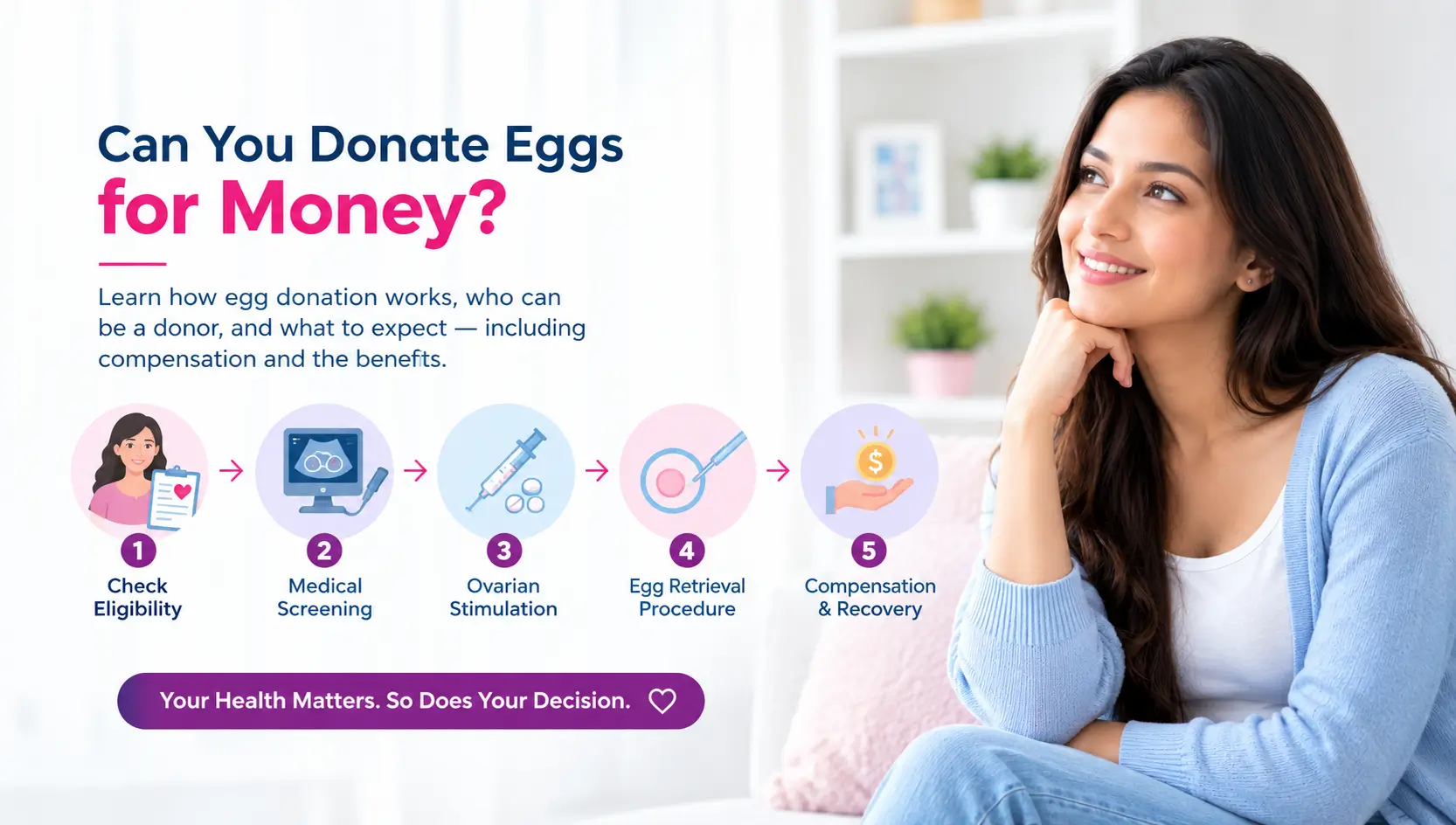
The process normally begins with an application and initial screening. If you meet the basic requirements, the program may request additional information and arrange medical testing.
The process can include:
- Application and initial review
- Medical and genetic screening
- Psychological evaluation
- Donor matching
- Legal paperwork
- Medication and ovarian stimulation
- Monitoring appointments
- Egg retrieval
- Recovery and follow-up
The exact timeline can vary between programs and individual circumstances.
What Happens During Egg Retrieval?
Egg retrieval is a medical procedure performed by a qualified fertility team. Medication is used to help the ovaries develop multiple eggs, while monitoring appointments help the medical team track progress.
When the eggs are ready, a fertility specialist retrieves them using a medical procedure. Sedation is commonly used during retrieval. Afterward, donors are monitored and given recovery instructions.
You should follow your medical team’s instructions carefully and report unusual or concerning symptoms.
When Do Egg Donors Get Paid?
Payment terms are different for each donation program. Generally, payment is associated with completing the agreed-upon donation process and not with just filling out an application.
Before starting, ask the program:
- How much compensation is offered?
- When is payment made?
- What expenses are covered?
- What happens if the cycle is cancelled?
- Are travel costs reimbursed?
Indian Egg Donors can provide program-specific information about eligibility, compensation, and the donation process.
Is Egg Donation Safe?
Egg donation involves medical treatment, so it is important to understand possible risks and side effects. Medication can cause temporary symptoms, and the retrieval procedure also carries medical risks.
A qualified fertility professional should explain the potential benefits, risks, alternatives, and recovery expectations before treatment begins.
Do not make a decision based only on compensation. Your health and informed consent should come first.
What Should You Consider Before Donating Eggs?
Egg donation can be a meaningful choice, but it requires time and commitment. Think about whether you are comfortable with medical testing, hormone medication, appointments and the retrieval procedure.
You should also read all agreements carefully and ask questions about privacy, compensation, medical care, and future communication. Indian Egg Donors can be contacted before applying if you want to understand the program requirements and available options.
How Can You Learn More About Egg Donation?
If you are considering donating eggs for money, getting accurate information before applying is an important first step. Speak with the program and ask questions about eligibility, compensation, medical requirements, timing, and potential risks.
For more information, contact Indian Egg Donors:
- Email: info@indianeggdonors.com
- Phone: (212) 661-7177
- Cell: (917) 601-4919
Frequently Asked Questions –
Q. Can anyone donate eggs for money?
A. No. Egg donation programs have eligibility requirements related to age, health, medical history, lifestyle, and screening results.
Q. How much do egg donors get paid?
A. Compensation varies by program, donor qualifications, location and experience. You should confirm the current amount directly with the program.
Q. How long does the egg donation process take?
A. The timeline varies. It can involve several weeks of screening, preparation, medication, monitoring, retrieval and recovery.
Q. Does donating eggs affect future fertility?
A. Egg donation involves medical treatment, so fertility-related questions should be discussed with a qualified fertility specialist who can explain your individual circumstances and potential risks.
Q. Is egg donation painful?
A. Some parts of the process may cause discomfort or temporary side effects. Egg retrieval is performed by a medical team and appropriate medication or sedation may be used. Your clinic should explain what to expect before treatment.

Dr. Kulsoom Baloch
Dr. Kulsoom Baloch is a dedicated donor coordinator at Indian Egg Donors, leveraging her extensive background in medicine and public health. She holds an MBBS from Ziauddin University, Pakistan, and an MPH from Hofstra University, New York. With three years of clinical experience at prominent hospitals in Karachi, Pakistan, Dr. Baloch has honed her skills in patient care and medical research.
- Dr. Kulsoom Balochhttps://blog.indianeggdonors.com/author/dr-kulsoom/

- Dr. Kulsoom Balochhttps://blog.indianeggdonors.com/author/dr-kulsoom/
- Dr. Kulsoom Balochhttps://blog.indianeggdonors.com/author/dr-kulsoom/
- Dr. Kulsoom Balochhttps://blog.indianeggdonors.com/author/dr-kulsoom/