AI Summary
- Egg donation is a fertility treatment where a woman donates her eggs to help another person or couple have a baby.
- The egg donation process includes donor screening, medical tests, matching, hormone treatment, egg retrieval, and IVF.
- Requirements for egg donation usually include good health, suitable age, a medical history review, and psychological readiness.
- Donated eggs are fertilized in a laboratory and transferred as embryos to the intended mother.
- Egg donor compensation may be provided for the donor’s time, effort, and commitment.
What Is the Egg Donation Process
The egg donation process is a medical procedure that helps individuals or couples who cannot conceive using their own eggs. In this process, a healthy woman donates her eggs, which are later fertilized with sperm through IVF treatment. The embryo born from it is transferred to the mother’s uterus.
Egg donation requires careful medical screening, legal procedures and emotional planning. The aim is to protect the health of the donor as well as increase the chances of a positive egg donation for the person who will receive it.
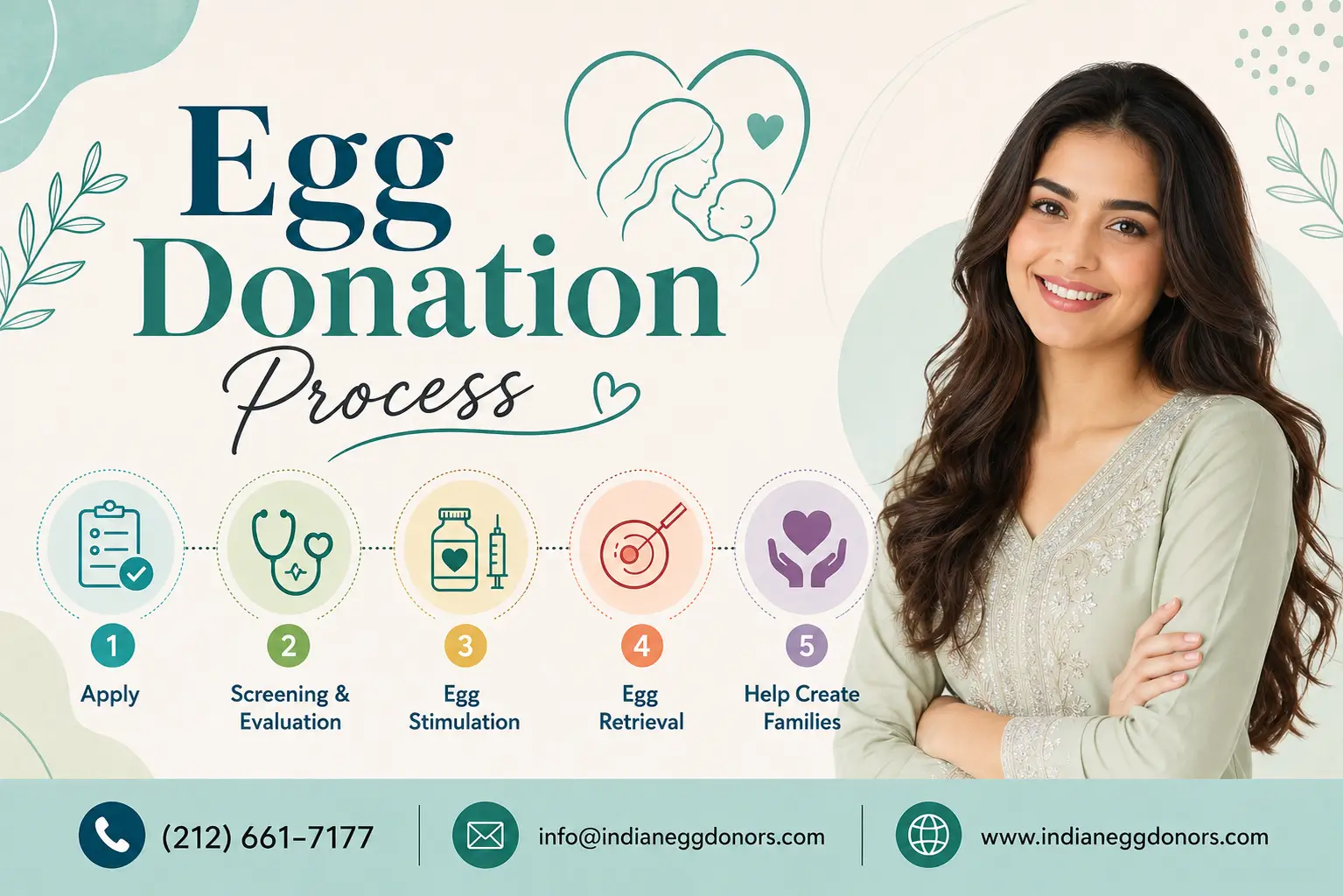
How Does Egg Donation Work Step by Step
The egg donation procedure follows several important steps. Each stage is designed to protect the donor and help create healthy embryos.
1. How Does the Egg Donation Process Begin
The process starts when a woman applies to become an egg donor. She provides information about her health, family background, lifestyle, and medical history.
A fertility specialist reviews this information to check whether the donor may be suitable for the program. If she meets the basic requirements, she moves forward for detailed screening.
2. What Are the Requirements for Egg Donation
Many people ask about the requirements for egg donation before applying. While requirements can vary between fertility programs, common criteria include:
- Being within the recommended age range for egg donation
- Having good overall physical health
- Having a healthy reproductive system
- Providing a complete medical and family history
- Passing medical and genetic tests
- Being emotionally prepared for the process
Donors are carefully evaluated because healthy eggs can improve the chances of successful fertility treatment.
What Medical Tests Are Done During Egg Donation
Medical screening is one of the most important parts of the egg donation procedure. Doctors perform several tests to understand the donor’s fertility health.
These evaluations may include:
- Blood tests to check hormone levels
- Ultrasound scans to examine the ovaries
- Tests for infectious diseases
- Genetic screening
- Assessment of ovarian reserve
A psychological evaluation may also be included to ensure the donor understands the emotional aspects of donating eggs.
How Are Egg Donors Matched With Intended Parents
After completing the screening process, approved donors can be matched with intended parents.
The matching process may consider factors such as:
- Medical history
- Physical characteristics
- Genetic background
- Personal preferences
The goal of matching is to assist parents in finding the right donor to meet their needs, while ensuring confidentiality and security during the entire process.
What Happens During Egg Retrieval
Following the matching of the donor’s ovaries, they begin ovarian stimulation. Normally, the body releases just one egg each menstrual cycle. However, fertility medication helps the ovaries to produce a variety of mature eggs.
In the stage of HTML0:
- The donor receives prescription hormone injections
- Doctors track egg development with ultrasounds, along with blood tests
- Adjustments to medication may be made if required
After the eggs have matured, the egg retrieval procedure is carried out. A doctor collects the eggs using a minimally invasive technique under medical supervision.
What Happens After Eggs Are Retrieved
After collection, the eggs are taken to a fertility laboratory. The eggs are fertilized with sperm from the intended father or a sperm donor.
The fertilized eggs develop into embryos, which are monitored carefully by embryologists. The healthiest embryo is selected for transfer into the recipient’s uterus.
The recipient’s uterus is prepared with medication to support embryo implantation and pregnancy.
How Long Does the Egg Donation Process Take
Many people wonder how long the egg donation process takes. The timeline can vary, but the complete process usually involves several weeks to a few months.
The main stages include:
- Application and approval
- Medical and psychological screening
- Donor matching
- Ovarian stimulation
- Egg retrieval
The actual stimulation and monitoring period usually lasts around two weeks before egg retrieval.
What Is Egg Donor Compensation?
Egg donor compensation refers to the payment provided to donors for their time, commitment, medical appointments, and effort involved in the process.
Compensation policies may differ depending on location and fertility program guidelines. Donors should always understand the complete agreement, including medical responsibilities and legal terms, before starting the process.
Women considering donating eggs should focus on choosing a trusted fertility program that provides proper guidance and support.
How Can You Start the Egg Donation Journey
If you are interested in learning more about the egg donation process, professional guidance can help you understand eligibility, medical requirements, and every step involved.
Indian Egg Donors helps individuals learn more about becoming an egg donor and provides information about the complete donation journey.
Connect with Indian Egg Donors
- Email: info@indianeggdonors.com
- Phone: (212) 661-7177
Frequently Asked Questions –
Q. How does egg donation work?
A. Egg donation works by collecting eggs from a donor, fertilizing them through IVF and transferring the resulting embryo into the intended mother’s uterus to achieve pregnancy.
Q. What are the requirements for egg donation?
A. Requirements for egg donation usually include good health, suitable age, normal fertility evaluation results, complete medical history and emotional readiness.
Q. Is donating eggs a safe procedure?
A. The Donating eggs criteria are generally considered to be safe if carried out under the supervision of a qualified medical professional. Fertility experts supervise donors throughout the process to limit the risks.
Q. How much compensation do egg donors receive?
A. Egg donor compensation varies based on the location, as well as fertility program policies and the individual situation. Donors need to discuss compensation details prior to beginning the process.
Q. How long does the egg donation procedure take?
A. The egg donation procedure can last several weeks, which includes screening preparation, hormone treatment, and preparation and retrieval of eggs. The exact timing is dependent on the donor’s particular situation.

Dr. Kulsoom Baloch
Dr. Kulsoom Baloch is a dedicated donor coordinator at Indian Egg Donors, leveraging her extensive background in medicine and public health. She holds an MBBS from Ziauddin University, Pakistan, and an MPH from Hofstra University, New York. With three years of clinical experience at prominent hospitals in Karachi, Pakistan, Dr. Baloch has honed her skills in patient care and medical research.
- Dr. Kulsoom Balochhttps://blog.indianeggdonors.com/author/dr-kulsoom/

- Dr. Kulsoom Balochhttps://blog.indianeggdonors.com/author/dr-kulsoom/

- Dr. Kulsoom Balochhttps://blog.indianeggdonors.com/author/dr-kulsoom/
- Dr. Kulsoom Balochhttps://blog.indianeggdonors.com/author/dr-kulsoom/