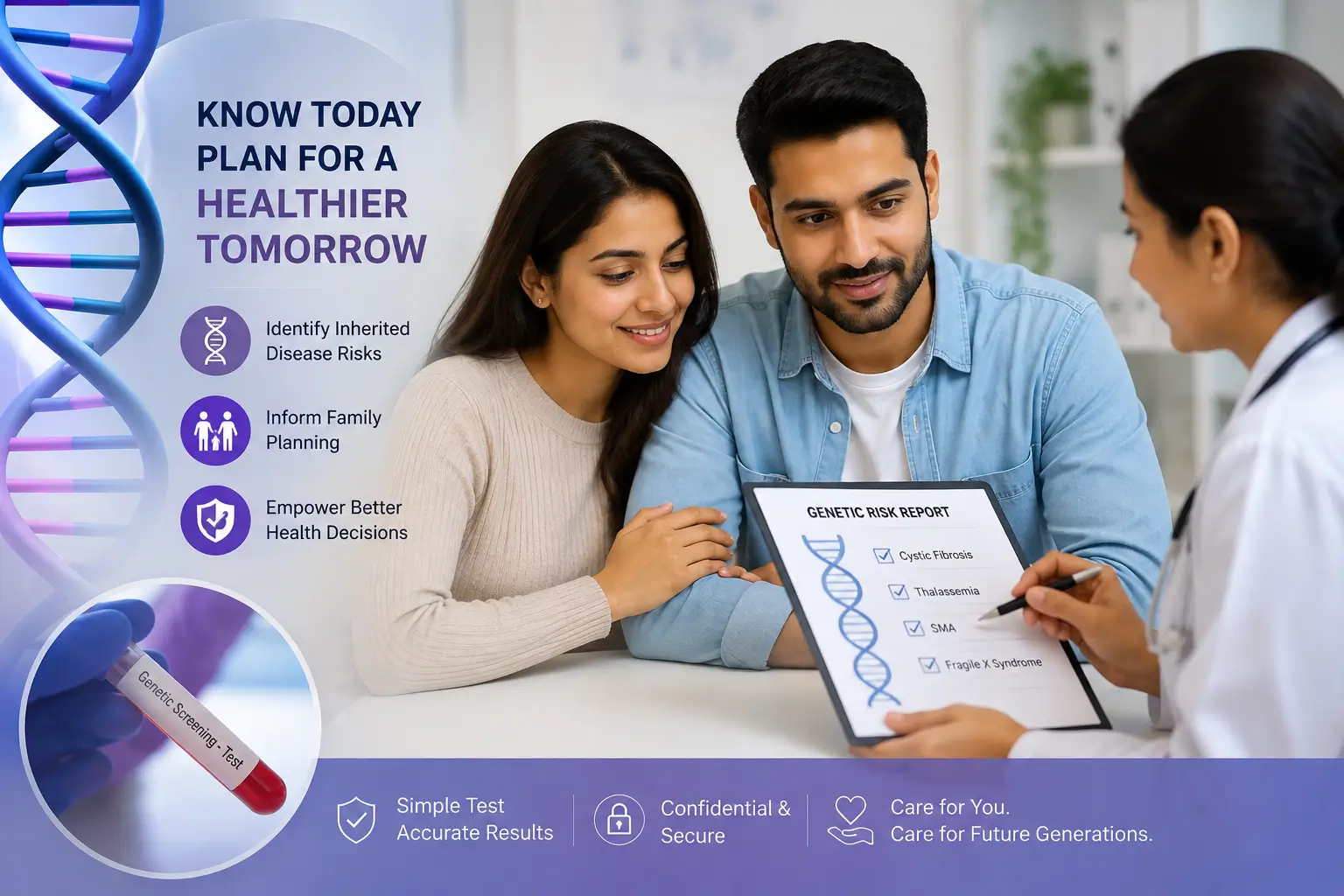
Feature Snippet:
- Carrier screening checks whether you carry certain inherited genetic conditions.
- A carrier usually does not have symptoms of the condition.
- Testing can be considered before pregnancy or during early pregnancy.
- If both biological parents carry the same recessive condition, a child may have an increased chance of inheriting it.
- Results can help people make informed family-planning and pregnancy-care decisions.
- A genetic counselor or healthcare provider can explain what your individual results mean.
Many people carry genetic changes without knowing it because they feel completely healthy. Genetic carrier screening can help identify some inherited conditions that could potentially be passed to biological children. This information may be useful before pregnancy, during fertility treatment, or in early pregnancy. It does not predict every health condition a baby may develop.
Still, it can provide useful information about certain inherited risks. Understanding how the test works, what the results mean, and what happens next can make the process less confusing. This guide explains carrier screening in simple terms for anyone beginning to explore genetic testing.
What Is Genetic Carrier Screening?
Genetic carrier screening is a test that checks whether you carry certain gene variants linked to inherited health conditions.
A person can be a carrier without having symptoms. This happens because carriers of many recessive conditions have one altered copy of a gene and one unaffected copy. The condition may become important when considering the genes contributed by both biological parents.
Carrier screening commonly looks for inherited disorders such as cystic fibrosis, sickle cell disease, Tay-Sachs disease, and thalassemia. Some screening panels test for many more conditions.
Why Is Carrier Screening Important Before Pregnancy?
Carrier screening can help people understand inherited disease risks before they become pregnant.
Testing before conception provides more time to review results and discuss available family-planning choices with a doctor or genetic counselor. Cleveland Clinic notes that carrier screening is ideally performed before pregnancy, although it can also be offered during pregnancy.
People researching genetic testing pregnancy options should understand that carrier screening is different from tests that directly evaluate a developing pregnancy. Carrier screening focuses mainly on the genetic status of the biological parent or parents.
How Does Carrier Screening During Pregnancy Work?
Carrier screening pregnancy testing usually involves a small sample of blood, saliva or cells collected from inside the cheek.
The sample is sent to a genetics laboratory for analysis. Results may take several days or weeks, depending on the laboratory and type of panel used.
If one parent is identified as a carrier, a healthcare provider may recommend screening the other biological parent for the same condition.
Carrier screening can also be offered during the first trimester when it was not performed before conception. Results may help guide discussions about further testing and pregnancy care.
What Does a Positive Carrier Screening Result Mean?
A positive result usually means that the test found a genetic variant associated with one or more inherited conditions.
It does not automatically mean that you have the disease.
For many autosomal recessive conditions, risk becomes more important when both biological parents carry variants associated with the same condition.
If both parents carry the same autosomal recessive disorder, each pregnancy generally has a 25% chance of producing a child with the condition, a 50% chance of producing a carrier and a 25% chance of producing a child who inherited neither altered copy.
A genetic counselor can explain how these percentages apply to your specific results.
What Does a Negative Carrier Screening Result Mean?
A negative result means the test did not identify the specific genetic variants included in the screening panel.
However, a negative result does not mean there is zero genetic risk.
Carrier screening cannot identify every possible genetic variant or every inherited condition. Cleveland Clinic explains that screening does not detect 100% of carriers for many disorders.
This is why results should be interpreted with a healthcare professional rather than viewed as a guarantee.
How Is Carrier Screening Different From Prenatal Genetic Testing?
Carrier screening and prenatal genetic testing answer different questions.
Carrier screening looks mainly at whether a biological parent carries a gene variant that could be passed to a child.
Prenatal screening or diagnostic testing evaluates information about the pregnancy or developing fetus. Depending on individual circumstances, doctors may discuss tests such as chorionic villus sampling or amniocentesis after reviewing family history or screening results.
The right test depends on your stage of family planning, health history and medical advice.
Who Should Consider Genetic Carrier Screening?
People planning a pregnancy may want to discuss carrier screening with their healthcare provider.
Testing may be particularly useful when:
- A genetic condition runs in the family.
- A previous child has an inherited disorder.
- One partner is already known to be a carrier.
- Fertility treatment or donor eggs are being considered.
- A healthcare provider recommends screening based on medical or family history.
Indian Egg Donors includes genetic screening within its donor evaluation process and works with fertility-clinic requirements when matching donors with intended parents.
How Can Carrier Screening Help With Egg Donation?
Genetic information can be an important part of evaluating reproductive options involving donor eggs.
Screening does not guarantee that a future child will be free of genetic conditions. Still, it may help doctors and intended parents understand known carrier findings and determine whether additional evaluation is appropriate.
Indian Egg Donors provides access to screened egg donors and works with intended parents navigating fertility treatment and donor selection. Individual screening requirements can vary depending on the fertility clinic and treatment plan.
What Should You Do After Receiving Your Results?
Start by reviewing the report with a qualified healthcare provider or genetic counselor.
Do not make major reproductive decisions based only on a laboratory report or internet information. A specialist can explain the condition involved, inheritance pattern, remaining risk and whether another biological parent should be tested.
For people considering donor-egg options or looking for more information about donor screening, Indian Egg Donors can provide guidance about its donor programs and screening process.
- Email: info@indianeggdonors.com
- Phone: (212) 661-7177
Frequently Asked Questions –
Q. Can you be a genetic carrier without having the disease?
A. Yes. Many carriers are healthy and have no symptoms. They may still be able to pass a gene variant to their biological children.
Q. When should carrier screening be done?
A. It is often best to discuss screening before pregnancy. However, carrier screening pregnancy testing may also be performed during early pregnancy when it was not completed beforehand.
Q. Does a positive carrier test mean my baby will have the condition?
A. No. A positive result means you carry a genetic variant. Your child’s actual risk depends on the condition, its inheritance pattern and the genetic status of the other biological parent.
Q. Is Natera genetic testing the same as carrier screening?
A. Natera offers several genetic testing services, and some may involve carrier screening. The exact purpose and scope of a test should be confirmed with your healthcare provider before testing.
Q. Should both partners have carrier screening?
A. Sometimes. If one person is found to carry an autosomal recessive condition, testing the other biological parent may help clarify the potential risk to a future child. A healthcare provider or genetic counselor can recommend the appropriate next step.

Rashmi Gulati
Rashmi Gulati, MD, provides innovative, individualized health care that nurtures mind, body, and spirit. Since 2004 she has been the medical director at Patients Medical, where she delivers comprehensive personalized health care, treating each patient as a respected, unique individual. Through their integrative health care center in the heart of Manhattan, Dr. Gulati and her colleagues have become premier care providers serving patients locally and throughout the world.
About Patients Medical
PatientsMedical.com is headed by Rashmi Gulati, MD who is a board-certified physician with over 20 years of integrative, functional and internal medicine experience.
Patients Medical is a holistic wellness center dedicated to helping its clients discover health and rediscover vitality. Their physicians combine the best of conventional and holistic medicine with state-of-the-art equipment to provide comprehensive care and treatment to their patients. They focus on the root causes of secondary medical conditions, integrating modern medicine, holistic practices, and natural supplements to fast-track healing and prevent disease. Every year, thousands of existing and new patients continue to visit the center, seeking an alternative medical approach to a variety of health issues.
In addition, Patients Medical provides access to over 15,000 affordable supplements on their affiliated website: www.MySupplements.Store
Our medical center in New York City.
Patients Medical PC
1148 Fifth Avenue, Suite 1B
New York, NY 10128
- Rashmi Gulatihttps://blog.indianeggdonors.com/author/rashmi/

- Rashmi Gulatihttps://blog.indianeggdonors.com/author/rashmi/